Still paying off the car? How selling with a lien works
A loan on the car doesn't stop the sale. The lender gets paid out at closing and you get the difference. Here's the sequence, step by step.
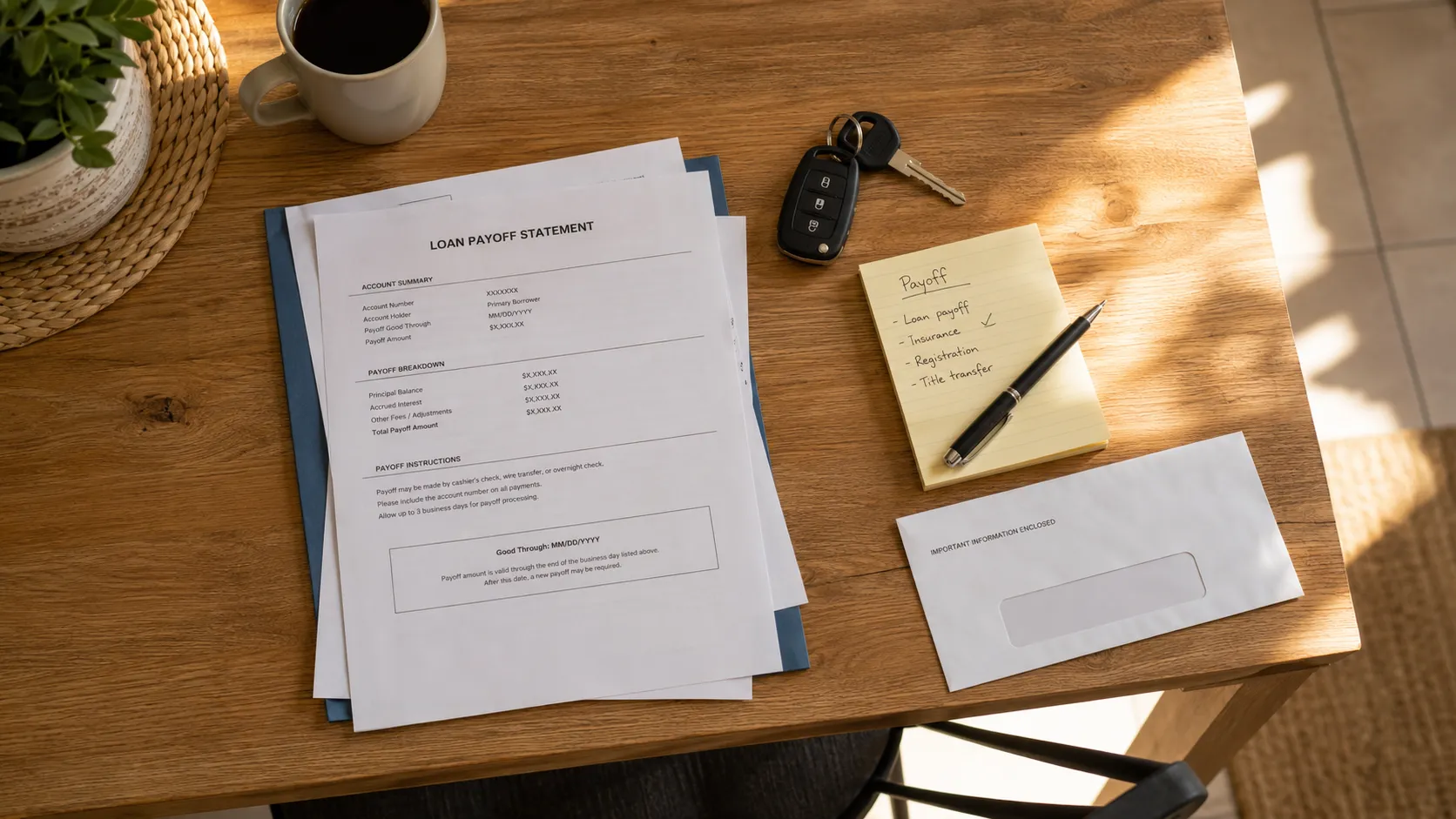
More than a few sellers sit on a car they’d like to sell because they still owe money on it and assume that’s a blocker. It isn’t. Financed cars are bought and sold every day. The loan just adds one step to the closing, and it’s a step the buyer’s side handles, not you.
What a lien actually is
When a lender finances your car, they register their interest against it in the provincial personal property registry. In Ontario that registration is public: anyone can look up a VIN and see that a lender has a claim. That’s the lien, and it’s why no serious buyer hands over money until they know it will be discharged.
This is also why “the buyer pays you, then you pay the bank” is the wrong order of operations. A buyer who does that is trusting you to follow through, and buyers who’ve been around don’t.
The right order of operations
First, your lender produces a payout statement: the exact amount that clears the loan on a given day, including interest accrued to that day. It moves slightly depending on the date, which is why payout statements come with a validity window rather than a single number.
At closing, the buyer pays the lender directly for the payout amount. Whatever remains of the sale price comes to you. The lender then discharges the lien from the registry, and the car transfers clean.
Equity, and the other kind
If your car sells for more than the payout, the difference is yours. Sell for $19,000 with $12,000 owing, and $7,000 lands in your account. (Illustrative numbers.)
If you owe more than the car brings, the gap is real and has to be settled at closing before the lien can be discharged. No honest process makes negative equity vanish, and you should be suspicious of any pitch that claims otherwise. What a competitive sale price does do is shrink that gap compared to a single lowball offer.
Where Carla fits
When you accept the winning bid, Carla verifies the lien, coordinates the payout with your lender, and sends your share by Interac e-Transfer once the paperwork clears. You never chase a discharge letter or wonder whether the loan actually closed.
If you’re not sure where you stand, get a range for your car first and compare it against your latest loan statement. Two minutes tells you which side of the line you’re on.